
 This isn’t really a story about an accident. It is about what happened after it.
I’ve had a pretty active childhood. Even though we mostly lived in remote areas, I’d spend hours outside playing cricket and other sports with my elder brother and the other boys around. During my intermediate years, I started playing volleyball during PE and gradually grew fond of it. Later, when I got into IIT Bombay, I joined the volleyball team and played competitively for five years, from 2011 to 2016. Our team was mostly made up of newbies, but somehow we went on to win the Inter-IIT gold medal in my fourth year.
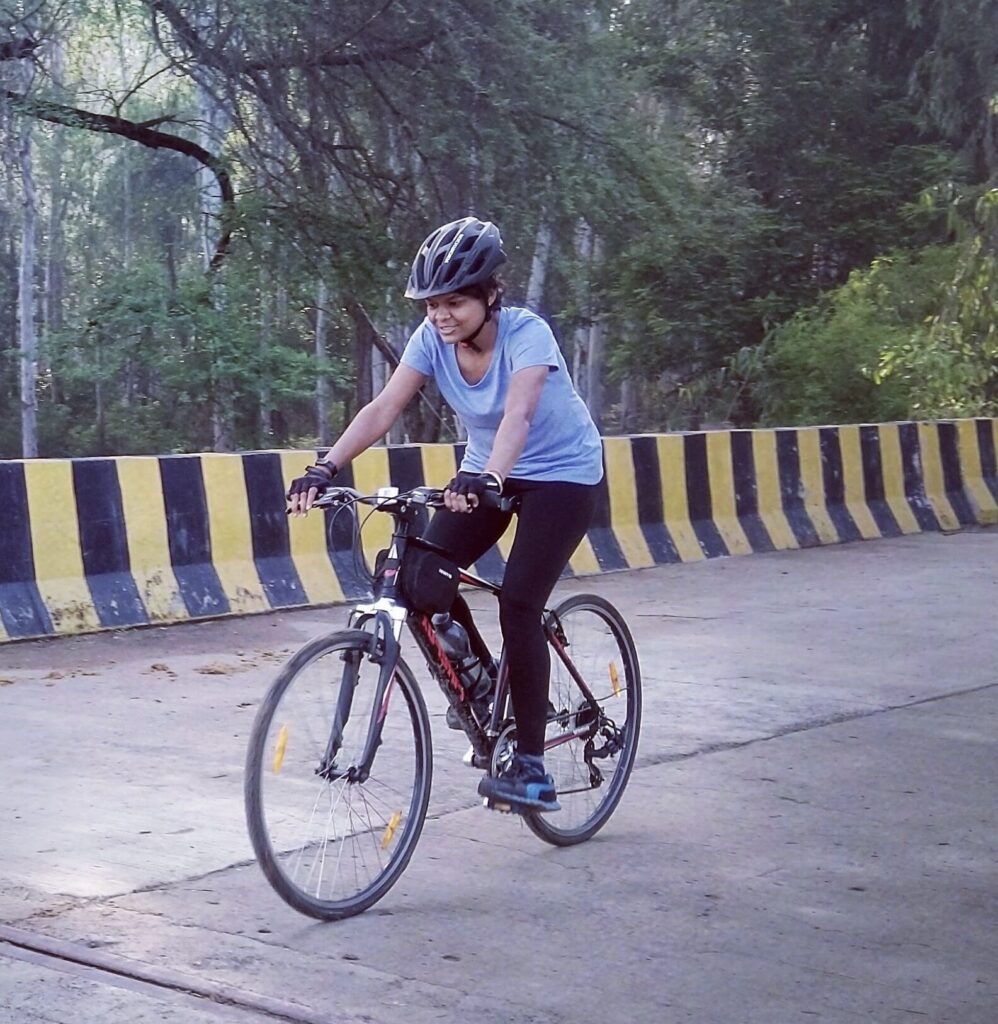
After college, my sporting life wasn’t particularly exciting until the end of 2017, when I bought a hybrid cycle and started riding for fun. I kept at it over the next couple of years, mostly riding with cycling groups in Bhopal and Indore, and gradually developed a real love for cycling. I didn’t know it then, but that bicycle was going to change the course of my life.
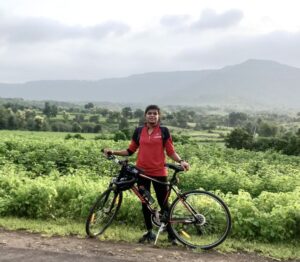
A few months later, on 27 August 2020, I decided to visit my grandparents’ place, a village about 10 km from home.I wanted to make it a longer ride, though, so instead of taking the direct route, I chose a longer one. My mom wouldn’t let me go alone, so my cousin came along on my little adventure. The roads were beautiful and serene, with farmland stretching alongside them.
On the way back the next day, a car hit us from behind. First my cousin. A second later, me. I was dragged underneath the car for what felt like forever — somewhere between 50 and 100 metres — still tangled with my bicycle. The car ran over my stomach, but I was incredibly lucky: the bicycle took much of the impact and left only a tyre mark on my stomach. My cycle wasn’t so lucky. The rear wheel broke into six pieces, and the spokes cut deep into both my groins. My entire body was scratched, front and back.
I went into deep shock, and for the next 10–12 hours, very little felt real. Luckily, my cousin was with me, and the accident happened close to a toll plaza, so he was able to call for help and an ambulance arrived quickly. But the ambulance took us to a government hospital, and there were no doctors until around 11 a.m., even though the accident had happened at about 7:30 in the morning.
All my clothes were torn. My cousin changed me into some spare clothes, so from the outside, nobody could really tell how badly injured my lower body was. The truth was, that was where most of the damage had happened. Because the driver had hit us and fled, the accident became an FIR case, and the hospital staff couldn’t properly examine me until the police arrived. When they finally did, they discovered that my groin was completely cut open, with some internal parts visible. My mother hadn’t understood how bad the accident was until that moment. When she saw me, she fainted in the hospital ward.
 Somewhere between losing and regaining consciousness, I remembered a doctor back in Indore whom I used to ride with. We fondly called him Doctor Sahab. He was around my grandparents’ age and had always treated me like his own kid. I told my parents to call him and said that wherever he told us to go, we should just trust him. So we got back into an ambulance and drove roughly 80 km to Indore. I remember lying there and murmuring: “Mujhe bhook lagi hai, kuch khila do.” (“I’m hungry. Please give me something to eat.”) Someone replied: “Mar rahi hai aur isko phir bhi bhook lagi hai.” (“She’s dying here and she’s still thinking about food”.) 😀
We reached the hospital around 3 p.m. It had been more than seven hours since the accident before I finally started receiving proper medical care. I was unconscious for most of the next 24 hours, although I do remember Doctor Sahab teasing me while giving me anesthesia: “Kya yaar, tu bhi car se thuki hai. Kuch truck wruck se thukti toh hum bhi bolte — dekho humari ladki kitni strong hai.” (“You only got hit by a car? If you’d been hit by a truck, then we’d really be able to say — look how strong our girl is!”)
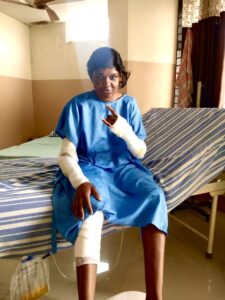
When I properly regained consciousness, I learned the extent of the damage. My whole body was scratched. I’d received 35 stitches across three places — my left knee and both my groins — along with countless other wounds across my body, including my face and even a few scratches on my teeth. I spent more than ten days in the hospital. And then came a different kind of pain. I couldn’t hold a glass. I couldn’t hold my phone. I couldn’t do much of anything for myself. I needed help just to turn onto my side. Sleeping was painful because I couldn’t lie on my back or on my stomach without disturbing the wounds. My body was covered in bandages, so I didn’t even know exactly where I had been cut.
During dressing, the nurses would clean the wounds with a thin film, and that was probably the most painful part of all. I’d almost guess where the wounds were based on how much each spot hurt. For several days, I don’t think I fully understood how serious the accident had been. It was only when people started visiting me, the bandages started coming off, and the painkillers wore off enough for the pain to register properly that reality began to sink in.
Throughout the hospital stay, my mom never left my side. She was there every time I got my dressing done. When I was finally discharged, she held my legs in her lap for the entire ride home so that the wounds wouldn’t stretch and the stitches would hold. That is a moment I don’t think I’ll ever forget.
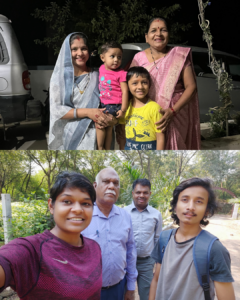 Once I was home, reality really set in. I started walking with a walker, and only then did I begin to feel the after-effects of the accident properly — pain surfacing in different parts of my body, weakness, stiffness and the realization that even the simplest things were suddenly difficult. For the next two months, my parents, my cousin, my Bhabhi-Bhaiya and my nephew helped me through almost every basic necessity.
I will forever be grateful for the little things each of them did. Bathing was one of the hardest tasks. My mom and my Bhabhi would help me, and I would feel guilty that they had to do such basic things for me. Some nights, I’d simply cry myself to sleep. I felt worthless, especially when I thought about how much everyone was already doing for me. Sometimes the pain would become unbearable. There were even days when I worried about something as basic as getting my period. I was terrified. I didn’t know what I was going to do because I wasn’t even able to wear my underwear.But the body is a strange and beautiful thing. It seemed to divert whatever resources it had towards healing the wounds. I didn’t get my period for almost two and a half months.
Slowly, the medication stopped. The stitches came out. But recovery wasn’t a straight line. New problems kept appearing. Severe neck and upper-back pain set in, made worse by suddenly living a far more sedentary life. There were countless nights when the new pain kept me from sleeping. The wounds also took far longer to heal than I expected. The top layer of skin didn’t fully return for almost a month. Eventually, I started doing my own dressings because my mom couldn’t bear to see the blood anymore.
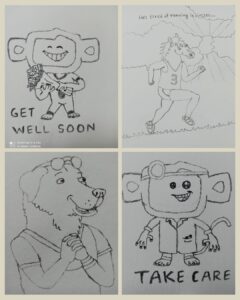 For that period of my life, I had very little to do besides recover. I finished the entire series of BoJack Horseman — it was pretty much the only thing I did. It was Nihal who suggested that series. He would also draw cute sketches every day and send it to me, this was actually something that I would look forward to each day.
But even while my body was healing, my mind was still stuck somewhere on that road. About two months after the accident, the post-traumatic episodes began. One dream kept recurring almost every other night. I would be riding a motorbike and would have another accident, except this time it was the other side of my body that was getting scraped raw as I was dragged along the road. The accident had happened once. My mind kept making it happen again.
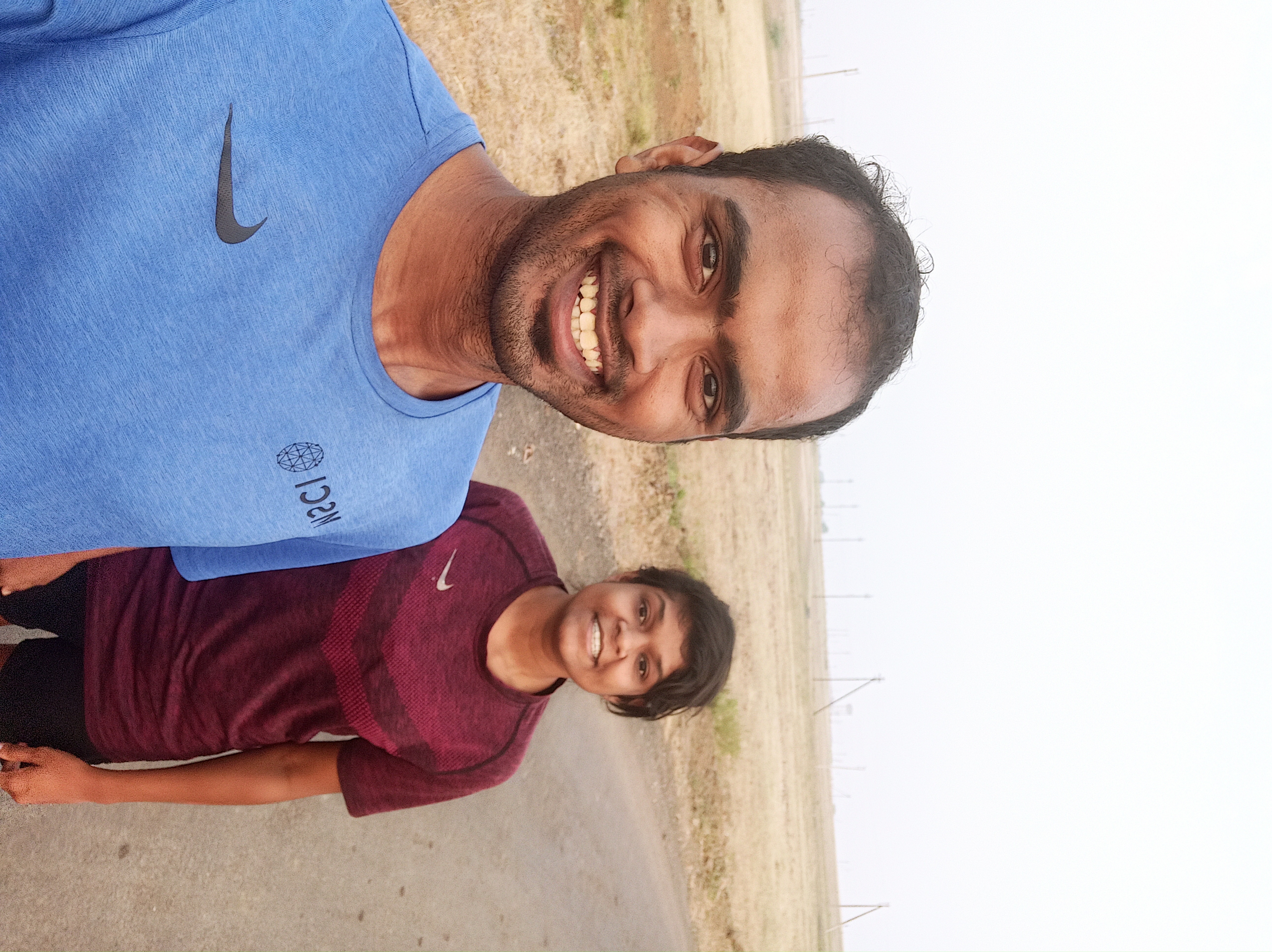
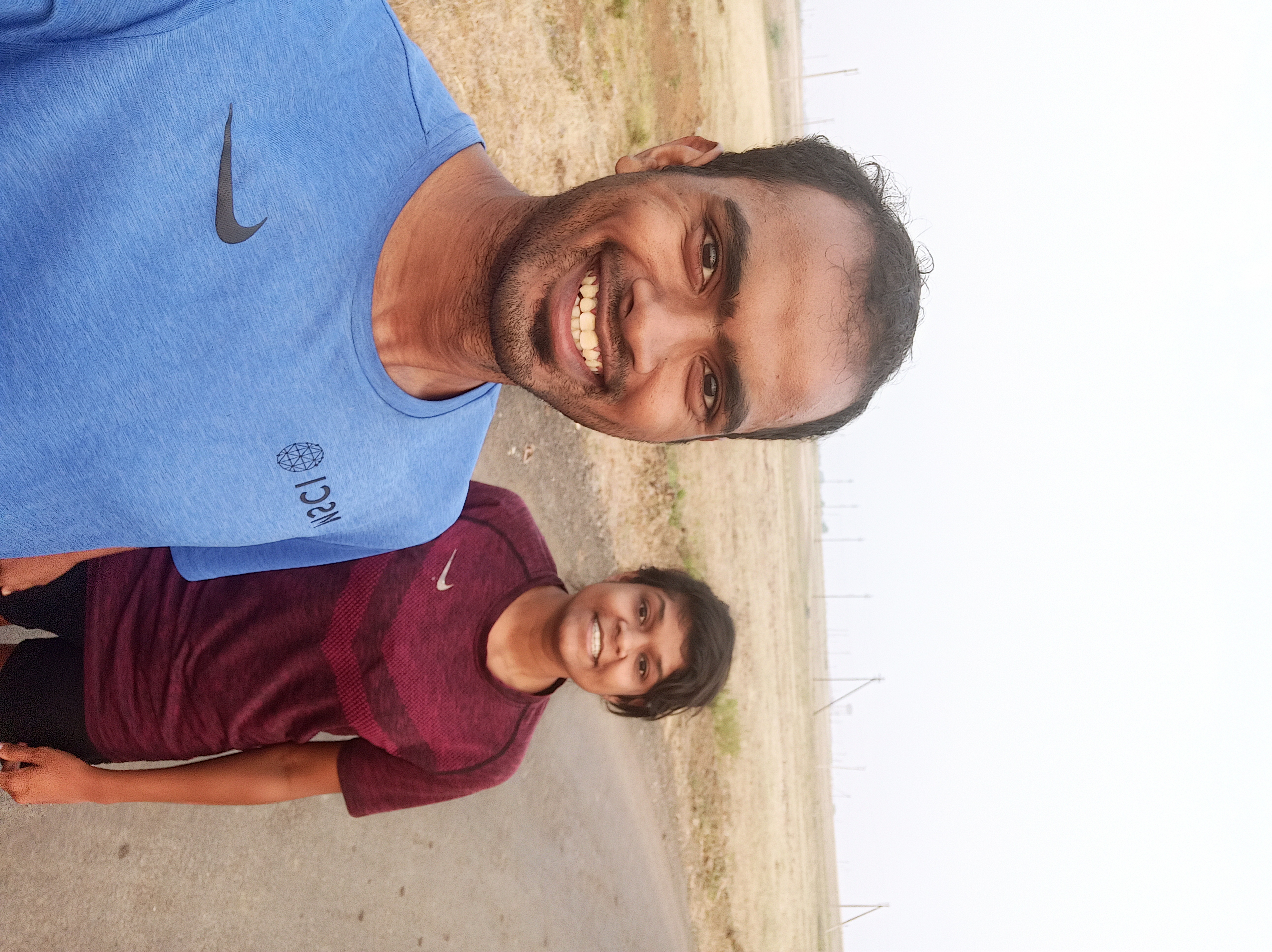
 From early October, I started walking every day for 30–45 minutes. It was probably one of the first things that made me feel like I was taking control of my body again. On 20 October 2020, Nihal came to visit. I told my mom that I wanted to try running while he was there. She simply said: “Haan, bilkul try karo.” (“Of course. Go ahead.”)
I ran about 100–150 metres. And stopped. Not because my body couldn’t continue. Because I was afraid. What if something happened to my groin again? What if the wounds opened? What if the road suddenly took me back to that day? I didn’t know much about physiotherapy then, and I hadn’t done any real exercise for almost four months. But I had just discovered something important: My biggest limitation wasn’t necessarily my body anymore. It was my mind trusting my body.
I’d been studying for the civil services before the accident. Afterward, I decided I wanted to build my life around sport instead. Sport had helped me recover better, but more importantly, it had given me a direction. It gave me something to work towards when everything else in my life felt uncertain. My brother was working in the administrative service and looking at his life and work, it made me realise that I wouldn’t be able to do sports while working in some remote location. I have to admit, things still aren’t really that great for women in several parts of this country. That and given I didn’t want to let go of something this close to my heart, made me feel stronger about my decision.
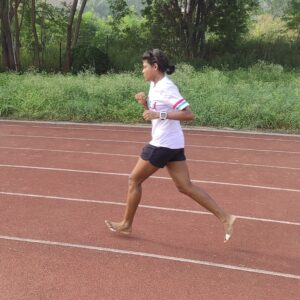 On 23 December 2020, I ran my first 1 km. It was a shaky, tentative kilometre. By any normal running standard, it was nothing. For me, it was enormous. It wasn’t really a finish line. It was proof that my body and I were both still willing to try. Before all this, I wasn’t even a runner. In fact, I used to hate running in college, especially when we were made to do warm-up runs before volleyball practice. And yet, from mid-January 2021, I started running for about 30 minutes, three times a week.
Eventually, it started getting easier. Or maybe I was getting stronger. Probably both. On days when I wasn’t running, I’d sometimes accompany Nihal to his workouts and sit watching everyone train at the Balewadi Athletics Track. The place was full of people working hard, suffering through intervals, finishing sessions, joking around, and starting all over again. It felt lively. Motivating. Inspiring. And slowly, it started pulling me in. At first, I was just watching. And then I told Nihal I want to try and run faster. We started with short strides, then 200s and eventually 400s. I eventually found my rhythm and felt I wanted to get faster and stronger. Somewhere along the way, I stopped being just a spectator and became a runner.
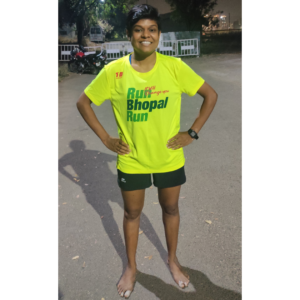
 On 15 March 2021, I ran my fastest 10K at the time. It was barefoot in 66 minutes. I was on cloud nine. It probably wouldn’t sound like a particularly impressive 10K to most runners, but I didn’t care. I knew exactly where I’d started. Nihal accompanied me on almost half of my workouts during this period, usually joining me during his recovery or cool-down runs. That was enough to keep me going.
Once I became comfortable with easy, continuous running and short intervals, I started introducing some quality work too. I’d do tempos of 15–30 minutes. I was finally getting the hang of it. More importantly, I was enjoying it. Running had stopped being something I had to do. I was starting to want to do it.
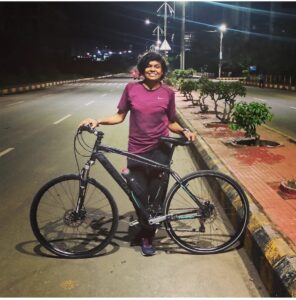 I eventually started riding indoors too. My first ride on the bike after the accident was on 30 September 2021. To my surprise, I was excited to be back on the bike. It wasn’t of my size, it was at least 2 sizes big, but I was happy and a bit emotional to be riding again. There were ofcourse some discomfort around my groin regions due to the stitch marks but I was making peace with everything and was eager to get back to cycling too.
Gradually, I found the courage to get back to outdoor cycling. I got a different hybrid bike and started riding around Pune, initially choosing quieter roads and times when traffic was lighter. I’d ride to Hinjewadi in the evenings or at night when the roads were emptier. The point wasn’t really the distance. It was getting comfortable with being on the road again. Every ride was a small negotiation with the fear that had been stuck inside me since the accident. Eventually, I started riding from home to the stadium too. Little by little, the roads stopped feeling like the place where my life had nearly ended. They started becoming part of my life again.
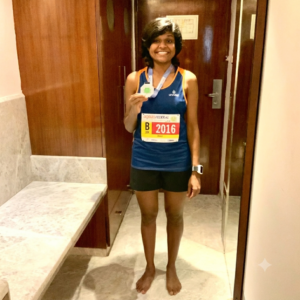
In October 2021, I ran my first official 10K race in Bangalore. It was a rolling, challenging route. And I ran it barefoot. I finished in 53:51. I’d put in a lot of quality work before the race, but the race also taught me something important. Whenever I pushed the intensity too much, the swelling in my calf would flare up quickly. So I stopped chasing speed. Instead, I shifted my focus towards longer efforts and endurance running. That was another lesson in rebuilding: sometimes getting better isn’t about pushing harder. Sometimes it’s about listening carefully enough to know what your body is telling you, adapting, and continuing to move forward.
Crossing that finish line in Bangalore felt like the real comeback. Not because 53:51 was some extraordinary performance. It was because, a little over a year earlier, I had been too afraid to run even 100 metres. And now I have just finished a 10K race. The distance mattered far more than the time. That day, I realised something I had been slowly learning for months: I wasn’t trying to become the person I was before the accident anymore. I was becoming someone new. Someone who had learned to trust her body again. Someone who has learned that progress doesn’t always look impressive from the outside. Sometimes progress is walking for 30 minutes. Sometimes it’s 100 metres. Sometimes it’s a kilometre. Sometimes it’s getting back on a bicycle.
And sometimes, after everything you’ve been through, it’s simply showing up again. That was my rebirth. What came after was a different story — reinventing myself as an athlete all over again, this time through triathlon, and eventually finding my way to the national stage. Something, I’d write about in my next blog.